Altitude Sickness (AMS) on a Himalayan Bike Tour: Symptoms, Prevention & What Guides Do About It
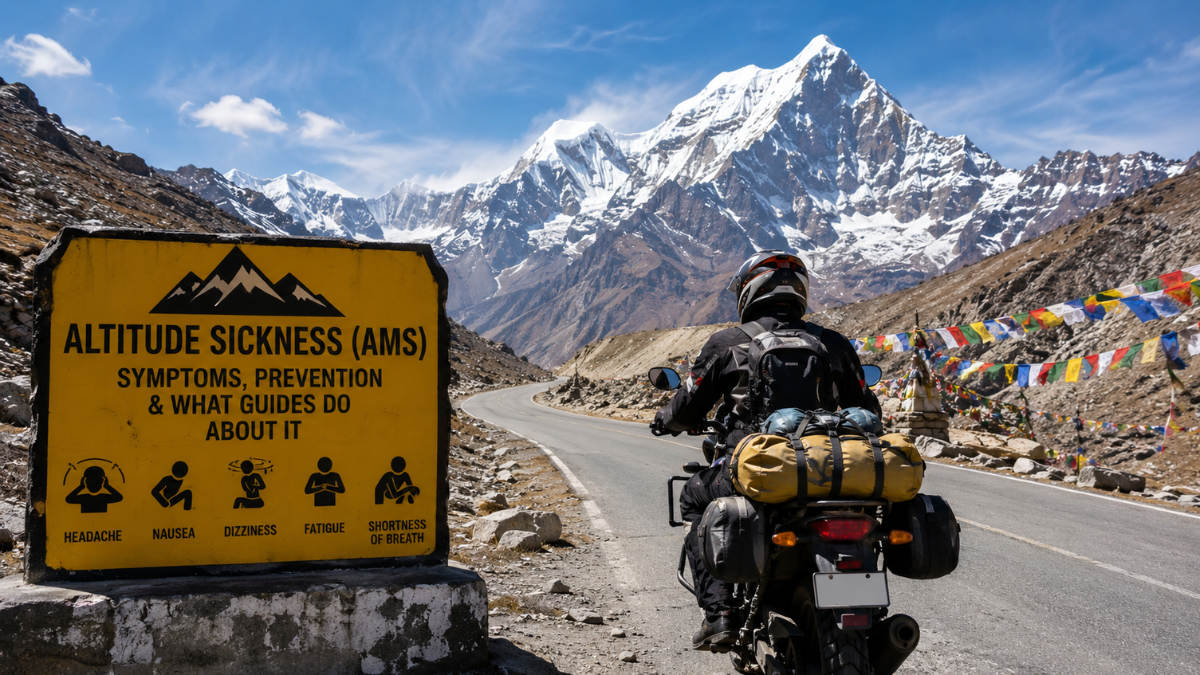
A Himalayan bike tour can take you from green valleys to mountain passes above 4,000 metres within a short period. At these elevations, the air contains less available oxygen, and the body needs time to adjust. This process is called acclimatization.
Altitude sickness, also known as Acute Mountain Sickness or AMS, is one of the main challenges riders should understand before starting a Himalayan Motorcycle Tour. It can affect experienced riders as well as first time visitors to high altitude. The important point is that fitness and riding experience do not make someone completely immune to AMS.
Our Himalayan itineraries are planned with acclimatization and rider support in mind. The Himalayan Heights Motorcycle Tour, for example, includes a rest and acclimatization day in Leh before riders continue towards higher altitude areas. Our team also carries oxygen and follows emergency procedures for high altitude situations.
What is altitude sickness and how to prevent it?
AMS usually develops after ascending to high altitude without enough time for the body to adjust. It is more common above about 2,500 metres, although individual responses vary. The risk becomes important on Himalayan routes because riders may cross several high passes during the same journey.
A rider may feel fine while riding through one valley and then develop symptoms after reaching a higher elevation. This is why our guides pay attention to how riders feel throughout the journey rather than assuming that everyone will react to altitude in the same way.
What are the common symptoms of AMS?
The early symptoms can look like normal tiredness after a long day of riding. Knowing the difference is important. Common symptoms include:
- Headache
- Tiredness or unusual weakness
- Loss of appetite
- Nausea
- Vomiting
- Dizziness or feeling unwell
- Difficulty sleeping
A mild headache after a long ride does not always mean AMS. However, when several symptoms appear together after gaining altitude, the rider should inform the guide and stop pushing forward. The biggest mistake is trying to hide symptoms because you do not want to slow down the group. On a Himalayan Adventure Motorbike Ride, reporting symptoms early allows the guide team to respond before the condition becomes serious.
How can riders prevent altitude sickness?
Acclimatization is the most important part of prevention. The body needs time to adapt as altitude increases. Medical guidance recommends gradual ascent and avoiding rapid increases in sleeping altitude, particularly above 3,000 metres. Rest days are also useful during longer high altitude journeys. There are several practical steps riders can follow:
- Allow your body time to acclimatize before riding to higher elevations.
- Drink enough fluids, but do not force yourself to drink excessive amounts.
- Avoid alcohol at high altitude, especially during the initial acclimatization period.
- Take proper rest after demanding riding days.
- Do not treat headache, nausea or unusual weakness as something you simply have to tolerate.
- Follow the pace and instructions given by your guide.
- Tell the guide immediately if your symptoms become worse.
Our itineraries are designed to include acclimatization where it matters. On the Himalayan Heights route, Leh is used as an important rest and acclimatization point before riders continue towards Nubra Valley and other high altitude areas.
Check out - Unique Moments on a Himalayan Motorcycle Tour
What Should You Do If You Get Altitude Sickness During a Himalayan Bike Tour?
If you develop symptoms of altitude sickness during a Himalayan bike tour, tell your guide immediately instead of continuing to ride. Our road captains monitor riders throughout the journey and can arrange rest, support vehicle assistance and oxygen when required.
If symptoms become serious or continue to worsen, descending to a lower altitude is an important part of treatment. Our team is prepared to respond to altitude related problems so riders do not have to manage the situation alone.
When does AMS become an emergency?
AMS should never be ignored if symptoms are getting worse. Serious warning signs can include confusion, extreme drowsiness, loss of coordination or difficulty walking. These can indicate High Altitude Cerebral Edema. Severe breathing difficulty, weakness or cough can indicate High Altitude Pulmonary Edema.
Both conditions require urgent medical attention and descent to lower altitude. For this reason, riders should always follow the instructions of the guide team and avoid trying to prove that they can continue riding despite serious symptoms.
How does altitude affect the riding experience?
Altitude does more than create a risk of AMS. Thin air can make riders feel more tired, while steep climbs, rough surfaces, cold temperatures and long riding hours add to the physical demand. This is one reason our Best Routes for Motorcycle Tours Himalaya are structured around riding stages, rest stops and acclimatization rather than simply trying to cover the maximum distance every day. Our Himalayan tours also use motorcycles suited to mountain terrain, support vehicles and experienced motorcycle mechanics. The Himalayan Heights route covers around 3,270 kilometres and reaches very high passes, so preparation and support are important parts of the experience.
What should international riders know before booking?
International riders searching for Top motorbike tours in India should look beyond the motorcycle and route when comparing Himalayan packages. Ask how the itinerary handles acclimatization, what emergency support is available and whether oxygen is carried on the route.
Our Popular Motorbike Tour Packages include Himalayan options for riders looking for different durations and levels of adventure. The Tour Calendar 2027 can also help riders plan their Himalayan journey around the available departure schedule.
For riders who want a longer high altitude expedition, the Himalayan Heights Motorcycle Tour offers a 22 day journey across major Himalayan regions. For riders with less time, shorter Himalayan itineraries are also available through our services.
The most important lesson is simple: altitude sickness is manageable when it is recognised early and treated with respect. A good Himalayan Motorcycle Tour should give riders time to acclimatize, experienced guides to monitor the group and a clear plan for emergencies.
Frequently Asked Questions
Can a fit and experienced rider still get AMS?
Yes. Physical fitness and riding experience do not guarantee protection from altitude sickness. Individual response to altitude varies, so every rider should monitor their symptoms.
Should I continue riding if I have mild AMS symptoms?
No. You should inform your guide and avoid gaining further altitude while symptoms are present. If symptoms worsen, descent may be required.
Do our Himalayan tours carry oxygen?
Yes. Our Himalayan Heights Motorcycle Tour includes oxygen cylinders as part of the first aid and emergency support equipment carried by the team.
